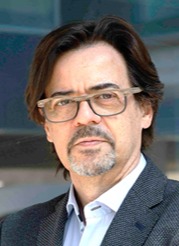
Narcís Cardona
Universitat Politècnica de València, Spain
Title: Deterministic Channel Modelling for ISAC and RF Digital Twins
Abstract:
The talk will address current approaches to radio channel modelling for frequency bands and channel bandwidths higher than those used in most commercial networks, typically carrier frequencies above 6 GHz and channel bandwidths above 400 MHz. In those cases, sensing is effective, since the delay and phase resolution allow spatial precision in the order of cm. In such a condition, integrated sensing and communications (ISAC) starts making sense, and the ISAC channel modelling, which was not so far standardised, needs to rely on a combined communications and sensing model. Such models must define how "targets" influence the channel and how sensing signals detect them. The most appropriate channel models for this case are deterministic, based on ray tracing or ray launching, but this means that, for both the environment and the targets, detailed information on their structure, materials, EM behaviour, and mobility must be available and carefully calibrated. If that is the case, deterministic modelling is suitable and can run on game-engine platforms or high-capacity computers. When such detailed information about the environment and targets is unavailable, alternative modelling of both is mandatory. The talk will elaborate on all these concepts and on current approaches to addressing the limitations of Ray-Tracing tools, the complete 3D description of environments and targets, the acceleration of RT algorithms, and the compression of the resulting channel matrices, enabling the integration of the models into real-time RF Digital Twins.
Short Bio:
Professor Narcis Cardona, Vice President of the One6G Association and Director of the 6G Joint Innovation Centre iTEAM-Huawei. Prof Cardona began his career at the Universitat Politècnica de València (UPV) in 1990, earning the rank of Full Professor by 2001. He is a co-founder, in 2004, and served as Director of the iTEAM Research Institute from 2017 to 2025, during which time it was transformed into a globally recognized center with nearly 200 researchers. He has also held academic leadership roles, including Vice-Dean of both the Communications Department and the School of Telecommunication Engineering at UPV. Professor Cardona has trained in radio and mobile communications at all academic levels and directed the Master’s in Mobile Communications from 2004 to 2010. He has supervised 29 PhD theses and nearly 200 master's theses, playing a key role in designing MSc and PhD programs at ETSIT-UPV. His contributions have earned him international recognition, including roles as General Chair of major conferences such as IEEE ISWCS, EuCNC, and IEEE PIMRC, as well as serving as a keynote speaker and award-winning author in the field of telecommunications. Professor Cardona has played a leading role in shaping next-generation wireless technologies, extending his leadership to European research coordination as President or Vice President of major COST networks such as IC1004, 2100, 273, and IRACON. He has led over 70 national and competitive EU-funded projects (including FP6, FP7, and H2020), contributed to more than 300 scientific publications, registered 14 patents, and co-founded several technology startups.