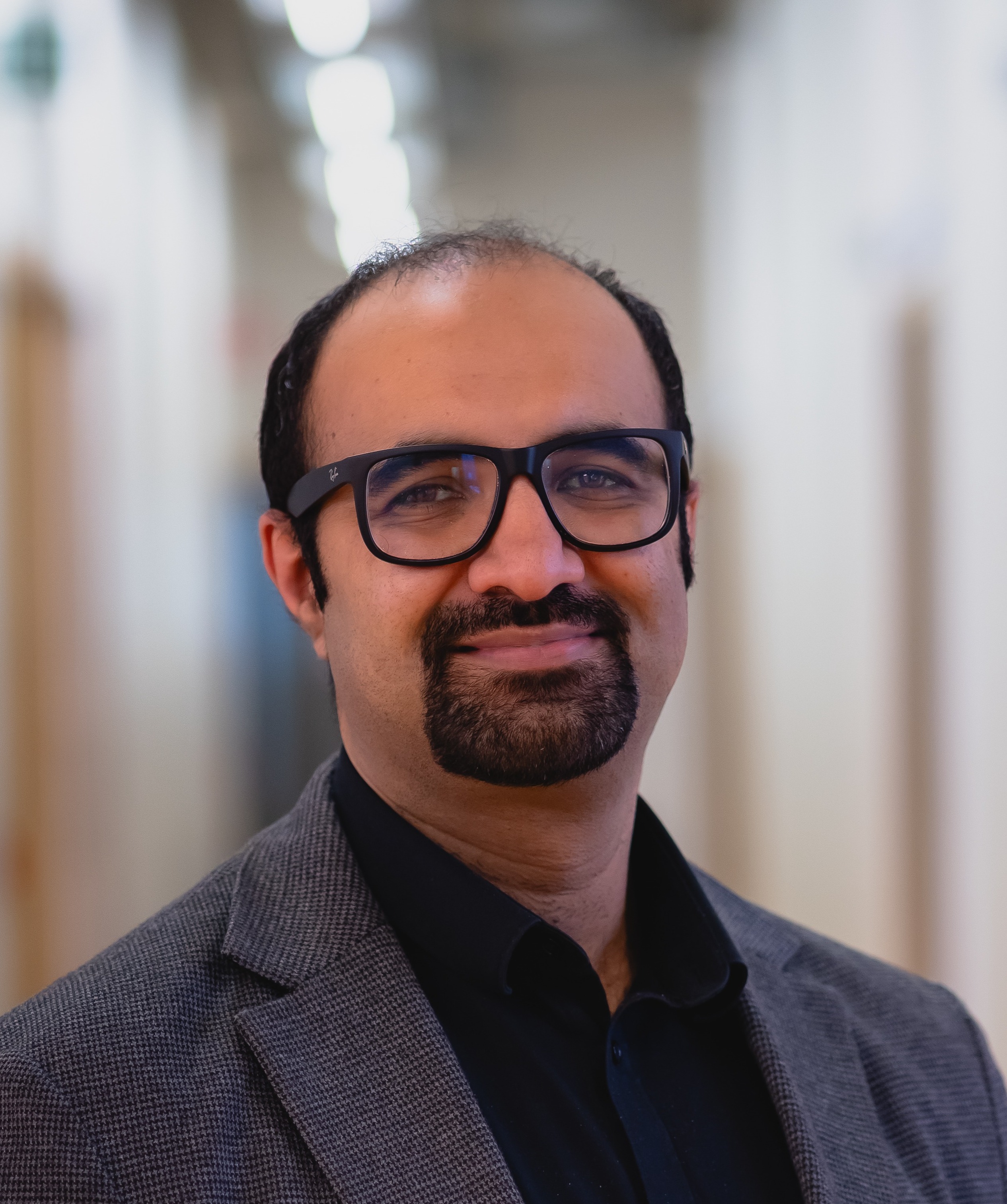
Adnan Shahid
IMEC – IDLab – Ghent University, Belgium
Title: 6G and the Rise of Reasoning AI: Foundation Models and Agentic Systems in the Physical Layer
Abstract:
As 6G networks transition toward "AI-native" architectures, traditional machine learning faces critical bottlenecks in generalization and labeling costs. This talk proposes a paradigm shift toward Wireless Physical-Layer Foundation Models (WPFMs). By utilizing self-supervised pre-training on massive unlabeled RF datasets, WPFMs enable a unified model to be fine-tuned for diverse tasks such as technology recognition and interference detection. We first detail transformer-based WPFM architectures and a breakthrough lightweight WPFM designed for edge implementation, achieving superior performance will fewer model parameters and less inference time. Crucially, we extend this foundation by introducing Agentic AI and Symbolic Reasoning into the physical layer. By integrating neuro-symbolic logic, we move beyond black-box pattern matching toward models capable of transparent, rule-based reasoning. We further explore the deployment of autonomous RF agents that leverage these reasoning capabilities to perceive, plan, and execute complex cross-layer optimizations. This synergy between large-scale pre-training, symbolic logic, and agentic autonomy provides a robust roadmap for truly cognitive and self-evolving 6G wireless environments.
Short Bio:
Adnan Shahid (M'15 - SM'17) received his Ph.D. degree in Information and Communication Engineering from Sejong University in South Korea in 2015. He is currently an Assistant Professor at the Internet Technology and Data Science Lab (IDLab) of Ghent University and imec, where he leads the 'AI/ML for Wireless' research within IDLab-iWINe (Intelligent Wireless Networking). He is an active contributor to several working groups, including the IEEE WG - P1900.8 Standard for Training, Testing, and Evaluating Machine-Learned Spectrum Awareness Models and the ATIS WG on Generative AI in Telecom. He has participated in numerous challenging projects, such as the DARPA Spectrum Collaboration Challenge (SC2), European H2020, 6G SNS, and ESA projects. Dr. Shahid currently leads several European and national projects (imec ICON, FWO). His research interests include wireless physical layer foundation models, decentralized learning, radio resource management, the Internet of Things, 5G/6G networks, and indoor localization.